← All projectsDESIGN IN DETAIL / P330

Timed Puzzle.

A steady interface around a changing puzzle.

Explore the story
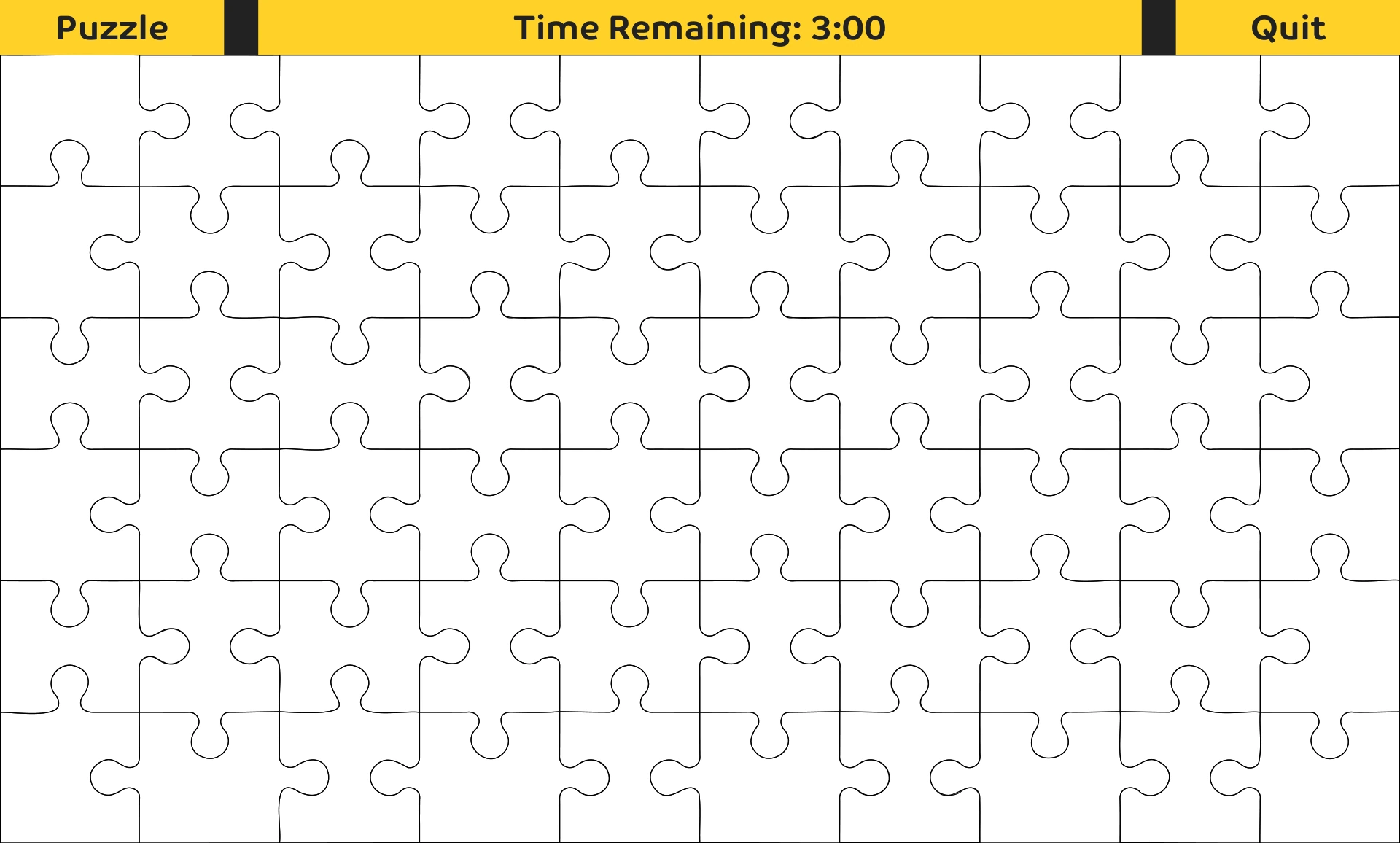
The complete empty puzzle-board state retains the native time-remaining display and quit control.
01 / THE IDEA

A closer
look.

Keep time and exit controls predictable across the puzzle artwork.

02 / DESIGN APPROACH

From intention
to experience.

Four artboards repeat the time-remaining display, puzzle label and quit action. The stable outer frame gives the puzzle content a consistent place to sit.

01

Read the time

A repeated time-remaining area gives all four artboards the same top-level reference.

02

Stay within a consistent frame

The puzzle label and quit control retain their position while the central artwork varies.

03 / THE VISUAL STORY

The work,
in full.

Explore the complete compositions and interface states. Select any image for a closer look.

VIEW 01 / 01

Puzzle board

The complete empty puzzle-board state retains the native time-remaining display and quit control.

The complete empty puzzle-board state retains the native time-remaining display and quit control.
04 / THE DETAILS

What brings
it together.

Structure, interaction and visual decisions that give the work its character.

Design decisions

  • Stable timer position
  • Persistent quit action
  • Four related puzzle artboards

Project components

  • Vector artwork and screen layouts
  • Screen-state artwork
Production notes & credits

RoleConfirm interface framing, puzzle artwork, hierarchy and developer handoff.

AssetsCredit supplied puzzle imagery, identity and software implementation independently.

StatusPrivate source/output study; contribution, implementation, final approval and delivered use remain unverified.

Image notes

  • The complete empty puzzle-board state retains the native time-remaining display and quit control.
  • Native interface artboard; source imagery, type and supplied graphic elements require attribution. Static design states do not establish live software, measured outcomes or a direct client relationship.
HAVE SOMETHING IN MIND?Let’s make it
an experience.