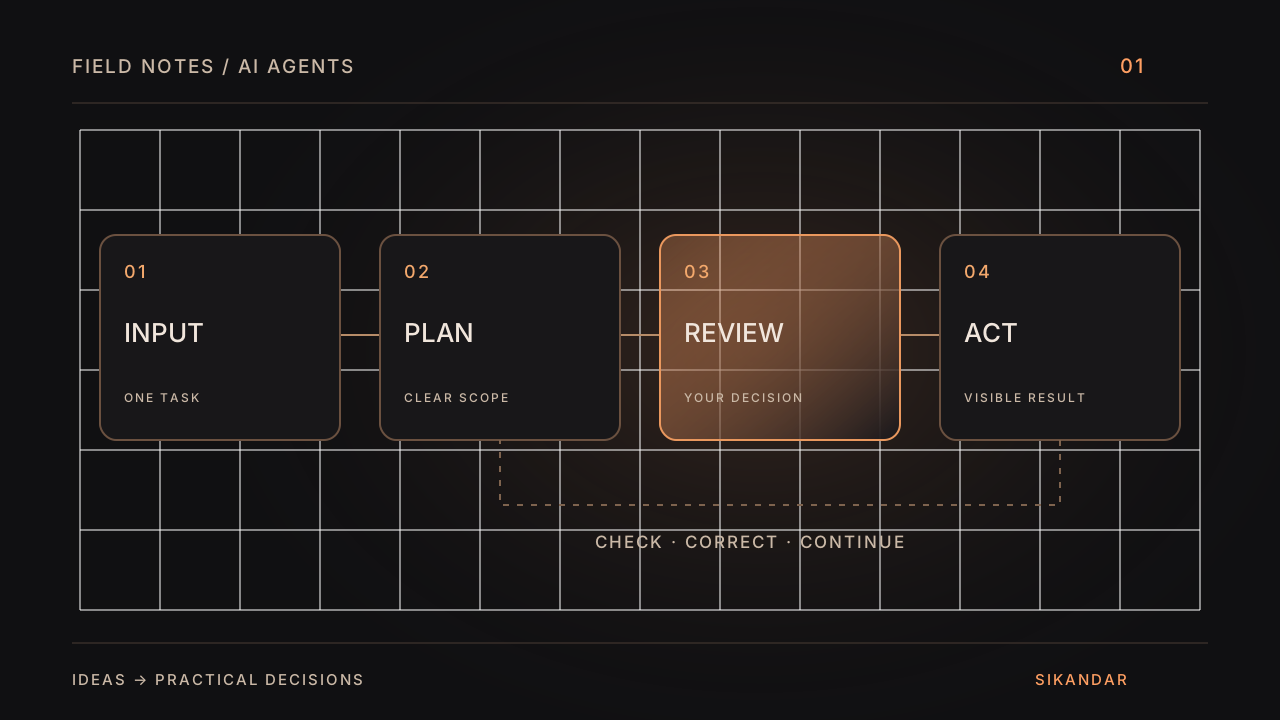
Choose a narrow workflow with visible results. Give the system limited access, keep important decisions reviewable, and measure the work it actually saves after corrections.
Why AI agents are getting attention now
The tools around agents are becoming more connected. On 22 October 2026, Anthropic announced that Agent Skills would move to the Agentic AI Foundation. Skills package task instructions and supporting material so an agent can apply a repeatable procedure. The announcement is a sign of an expanding ecosystem, rather than evidence that every business task is ready for autonomous execution.
For buyers, the practical question is changing from ‘Can this system write an answer?’ to ‘Can it complete the next step correctly, with the access we are prepared to give it?’ That makes process design as important as the model selected.
Source: Anthropic: Agent Skills announcement, 22 October 2026
An AI agent is not the answer to every automation problem
A fixed automation follows a sequence established in advance. An agent can use a model to decide which step or tool to use as the task develops. Anthropic's engineering guidance makes this distinction and recommends starting with the simplest approach that solves the problem.
For example, moving a submitted form into a spreadsheet probably needs a predictable integration. Reading an unusually structured enquiry, identifying missing information and preparing a draft reply may benefit from language-model assistance. Sending the reply can remain a separate, approved action. These are different responsibilities, even if a vendor puts them behind one button.
Three candidates for a first pilot
Look for work that arrives often enough to study and produces an output somebody can inspect. The following are illustrative starting points, not promises that an agent will handle them without supervision.
- Enquiry preparation: extract the requested service, deadline and missing details, then draft questions for a team member to approve.
- Internal document assistance: retrieve relevant passages from an approved collection and show where each answer came from.
- Job preparation: turn an approved brief into a structured task list, flag unclear requirements and leave assignments for a person to confirm.
Design the approval screen before enabling actions
Imagine an assistant preparing a supplier enquiry. The review screen should show the recipient, message, attachments and the information used to create it. A vague ‘Approve’ button is less useful than a preview of the exact action. Editing and rejection should be easy to find.
Start with read-only access where possible. Keep credentials on the server, limit each integration to the necessary scope, and distinguish document content from instructions the system is allowed to follow. A sentence inside an uploaded file should not silently gain permission to change records or contact someone. Budget limits, timeouts and a clear stop action belong in the brief too.
Measure the corrected result, not the demonstration
Build a small evaluation set from representative examples, using redacted material when necessary. Include incomplete requests, contradictory information and an input that should be rejected. Have the team judge the result against the same criteria used for the current process.
Record review time, corrections, unsuccessful attempts and usage cost. If preparing a draft takes less time but checking it takes longer, the apparent saving may disappear. Set the acceptance criteria before the pilot so an attractive demo does not redefine success halfway through.
- What counts as a correct result?
- Which actions always need a person?
- What information can the system access?
- Who receives failures and can resume the task?
- What would justify continuing after the pilot?
Start with a workflow you can explain on one page
Describe the trigger, the input, the allowed actions and the expected output. Add two normal examples and one exception. This is enough to make an initial conversation concrete without committing to a large automation platform.
A successful first release can be modest: a reliable preparation tool with a good review screen. Expand its responsibilities only after the people using it understand its limits and the evidence supports the next step.